Frost Fans for Orchards: How Moving Air Protects Your Crop
Frost fans for orchards move warmer air from the inversion layer down into the canopy on clear, still nights, so blossom and young fruit stay nearer their critical temperature. This guide explains the principle, the selection factors and the Sanxin SX-FSD series.
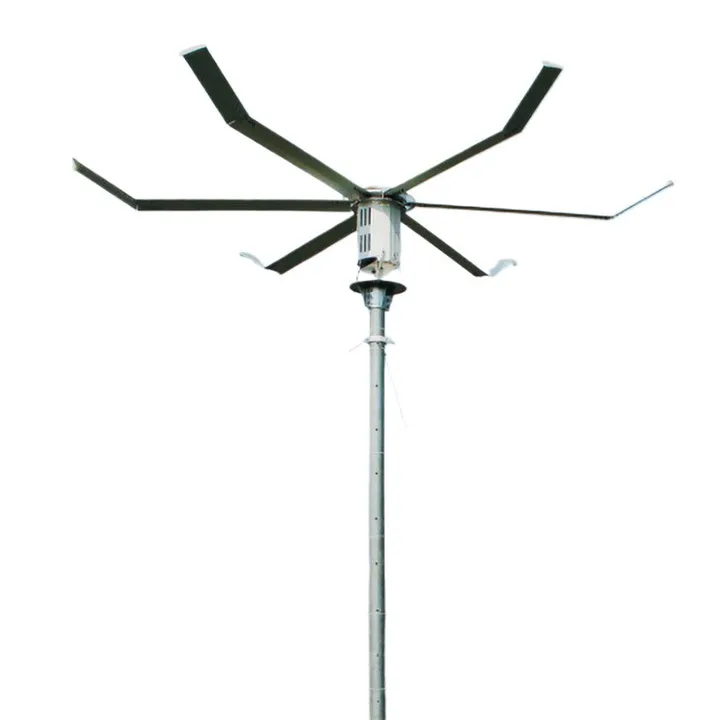
How Frost Fans for Orchards Move Warm Air Down to the Crop
On a radiation frost night the sky is clear and the air is still, and the ground loses heat quickly. That leaves a layer of warmer air a few metres above the canopy while the air at crop level keeps cooling. Frost fans for orchards reach that warmer layer from a tower and push it down through the canopy. The colder air near the ground is displaced upward, mixes with the moving stream, and the plant surface settles nearer to, or above, the critical temperature instead of falling below it.
Timing matters as much as airflow. In practice a fan is run from an accurate temperature sensor placed at canopy height, with a start-up threshold set above the crop’s critical temperature, so the machine begins moving air before tissue freezes rather than after. The method works best on radiation frost nights with still, clear air. In strong wind the inversion does not form and there is no warmer layer to bring down, and under heavy overcast the loss of heat is slower and fan protection is less effective.
- Area to be covered per unit, which sets how many units a block needs and how their patterns overlap.
- Tower height, which decides whether the intake reaches the warmer layer above the canopy.
- Airflow and thrust, which together determine how far the moving stream travels before it slows.
- Throw direction, matched to row orientation, trellis height and the night-time drift of air.
- Power supply on site, including the voltage and phase the installation can provide.
- Automation, whether the fan is switched by a sensor, a timer or a control panel, and how start-up is triggered.
These points are general industry principles rather than guarantees of performance in a particular block. Outcomes depend on the site, the crop stage, the weather pattern and how the equipment is installed and run. Published data for each unit sits on the individual SX-FSD model pages, and the table below lists the model, power supply, motor power and anti-frost area for the series.
Anti-frost fan specifications
| Model | Power supply (3-phase 4-wire system) | Motor power | Anti-frost area |
|---|---|---|---|
| SX-FSD15-360rotary anti-frost fan | 3~380v | 3.7kw | 7.5mu |
| SX-FSD15-120 shaking head anti frost fan | 3~380v | 3.7kw | 2.5mu |
| SX-FSD09-360 rotary anti-frost fan | 3~380v | 2.0kw | 3.5mu |
| SX-FSD09-120-pivoting-anti-frost-fan | 3~380v | 2.0kw | 1.5mu |
What Frost Fans for Orchards Do During a Radiation Frost
Sanxin builds the SX-FSD series anti-frost fan for orchard and vineyard frost protection, and each unit is listed on its own product page with its own published figures. The series includes SX-FSD15-360 rotary anti-frost fan, SX-FSD15-120 shaking head anti-frost fan, SX-FSD09-360 rotary anti-frost fan and SX-FSD09-120 pivoting anti-frost fan. The table below gives the model, power supply, motor power and anti-frost area for the range; the pages for individual models carry their own detailed data, mounting notes and drawings.
The mounting changes the shape of the area that gets air. A 360-degree rotary head turns through a full circle and distributes the stream all round the tower, which suits a block laid out around the unit. Both approaches use the same principle, and only the pattern on the ground differs.
Which version fits an orchard depends on layout rather than on a single rule. Row direction, terrace shape, the position of the tower relative to the block and the parts of the block that need coverage all point to a rotary or an arc-sweeping head. Where a unit stands inside the crop, a full-circle pattern reaches the rows behind as well as in front; where it stands on an edge, an arc may put the air where the crop is.
Sanxin was established in 2001 and integrates R&D, production, sales and service, with separate workshops making fan components and a coating shop serving its products. Alongside the standard anti-frost models, Sanxin offers OEM and ODM production and drawing-based or sample-based customisation of fans and fan parts, including fan blades and guards. Development work is handled by the company’s own engineering team and mould factory, and manufacturing covers the build in-house.
Installing and Running a Frost Fan in an Orchard
Siting decides whether the air reaches the crop. The tower should stand clear of tall hedges, buildings and trees that would break the stream before it crosses the canopy, and the head should sit high enough for the discharge to enter the warmer layer. The base needs anchoring for the loads the fan will see, and the position should leave room for inspection and service without moving equipment across wet ground.
Run the fan before the critical temperature is reached, not after tissue has already cooled to it. A sensor at canopy height, shielded from direct radiation and checked against a second reading, gives the trigger point. The start-up threshold is set a margin above the crop’s critical temperature so the machine is already mixing air when the inversion is at its strongest. Logging start and stop times and the weather each night builds a record of what the site does.
Between seasons, check blades, guards and fasteners, clear debris from the head and confirm the drive turns freely. Sanxin inspects products after every process and checks finished units in full to the customer’s requirements, using its own testing lab and inspection equipment. Maintenance intervals for a specific unit come from its manual rather than from a general guide, and worn blades or bent guards are replaced rather than straightened.
An order usually starts with the fan type, the area to be covered, the voltage and phase available on site and the airflow expected. From those details Sanxin proposes a model, provides a sample, then produces, inspects and ships, quoting FOB, CIF or CNF as agreed with the buyer. Inquiries are answered within 12 hours on working days, and the contact page lists what is needed to start.
Request a quotation
Describe the application, space and power supply, and we will suggest a model.
Or write to sales@axialfansupplier.com